While tea – certainly matcha, these days – is what folks often think about when thinking about caffeinated beverages from Japan, there is a robust, world-renowned coffee culture in Japan. From the Showa-era kissatens to the specialty roasters to the omakase experiences, Japan has tons of coffee spots to check out, surely more than what one visit can handle.
During my recent visit to Japan (namely Tokyo and Mishima), I ended up going to several spots featuring domestic roasters and/or single origin beans. Here’s a recap of them:
Lonich,
I can’t remember how I came across Lonich, but it must have been via Instagram after I posted about a past visit to another coffee omakase spot, Koffee Mameya Kakeru (which is not discussed in this blog post, but is very much worth checking out). Having enjoyed that experience, I wanted to try something different, especially one that touted a focus on high-quality beans and did their own roasts. I booked a “creative course” reservation at Lonich, for my first full day in Tokyo, knowing I could take advantage of the jetlag to be up and about early.
(And yes, the name of the spot is “Lonich,” with the comma included – this is important!)
After an early breakfast at Tsukiji Market and a nice three-ish mile walk from Tsukiji to Kuramae, I arrived at Lonich and was met by Katsumi-san, my barista for the day. It was just me for the first seating at 9 AM, right after the shop opened up.

The Lonich, space is split into two: a small counter for to-go orders, and a longer seated counter for reserved courses. The shop features a lot of concrete and other neutral-colored building material, with a few accents of red. It was certainly more modern looking than Koffee Mameya Kakeru, whose space featured softer cushions and natural wood accents. As I sat at the metal slabbed bar, Katsumi-san shared my options: a seasonal course, a creative course (featuring some tea elements), or the omakase course. I went for the latter.
We started with a pour over featuring a washed geisha variety from the Finca Santa Monica farm of Quindio, Colombia.


Like other geisha coffees I’ve had, I was impressed with how floral and fruity the drink was. I would agree that I could taste flavors of apricot and peach, though I felt like I tasted more of the earthy, bitter-then-acidic-then-sweet flavors you get of each fruit when you eat around the pit (not a bad thing, just some nuance). The flavors were delicate enough that I could taste the noted jasmine. I sipped this slowly as I watched Katsumi-san prepare the next drink and we chatted a bit about his background as a wine sommelier and how there’s similarity to working with coffee.

For the next course, Katsumi-san shared their signature coffee mocktail drink and snack, which is a play on the Japanese concept of “gomi,” or the five basic tastes (sweet, salty, sour, bitter, and umami). This featured a coffee Lonich themselves imported from China, which was something new to me. While this was written in front of me, I later learned (with the help of Google Translate, but also their website) that lemon is infused into this coffee during the fermentation process, providing a light citrus lift to balance the sweet natural flavors of the coffee. Interestingly for this cocktail, Katsumi-san also put tea with the ground beans as he pulled the espresso shot, allowing the flavors to fuse together. A very light brown sugar and blackcurrant extract completed the cocktail mix. This was all served with a little bit of cream cheese for balance and the umami flavor note.
I really enjoyed this cocktail. It truly was a dance of all five tastes. I sat and savored the drink, but had to hold my breath at times at the risk of inhaling the decorative gold leaf that made the drink look extra pretty.


Next, I got to try the first Colombian geisha bean in espresso and latte form. Katsumi-san asked me to stir the espresso three times before tasting it. I asked if it made a difference. He shared a story of a German engineer who visited and taste tested the espresso after not stirring it, stirring it once, stirring it twice, and then stirring it three times. He agreed three times does make a difference. Katsumi-san and I agreed that was a very German approach to the coffee tasting.
Of all the ways I tried , this was my least favorite, though that’s not to say it wasn’t delicious. I think I generally prefer having deeper flavors to my espresso; this geisha bean gave me a punch of acidity I wasn’t expecting.
However, when added to some milk, I felt the fat from the milk helped mellow the floral and fruity flavors of the geisha bean. That cup went down very quickly.


I ended the tasting with one last pourover, this time featuring another geisha bean from the Santamaria Estate, one of the leading coffee producers in Panama. As another light roast, I could taste the floral and sweet acidity of its grape, jasmine, pomegranate juice, and rose hip notes. I savored this one for the remainder of my hour.
Overall, I think this is a good experience for a serious coffee drinker who likes lighter roasts and does not mind paying a premium price for more unique beans.
Kielo Coffee
One morning after eating breakfast at Misojyu in Asakusa, I stumbled across Kielo Coffee on my walk to the station. The shop was small, but inviting with white walls and warm wood panels that are synonymous with Japandi vibes.
I learned Kielo Coffee lightly roasts their own beans, and there were a good number of them to try even though a handful were out of stock. Despite liking and drinking a good amount of coffee, I’m still learning the nuances in how different terrains, beans, and roasting and treatment processes impact flavor – so in the moment, I felt myself to be indecisive. I asked the barista what his recommendation was for a hot pourover; he suggested their Colombian bean that had gone through a honey double fermentation process. That sounded cool.
A little bit after sitting down at the large communal table, the staff brought my coffee over, some already poured in a small cup while the rest was kept in a glass coffee beaker.

True to its tasting notes, this coffee tasted bright and ripe with an acidic punch of citrus and tropical fruits. I kind of wished I had it iced; it would have been refreshing given how warm and humid it was outside. Generally speaking, I’m not the biggest fan of acidic coffees, so I also think some ice would have helped round out the flavor.

Still, I enjoyed my cup, especially with the quiet vibe of the shop and its location off of the main road. A lot of tourists came by and one opted for a morning slice of matcha flavored Japanese cheesecake, which I’ve made a mental note to try the next time I visit because it looked like a very delicious pairing with this kind of coffee.
Tabi to Coffee
In searching for specialty coffee spots in my hotel’s vicinity, I found Tabi to Coffee, a small shop nestled on the second floor off one of the main roads in Asakusa.


Unlike most of the other places I visited on this trip that roasted their own beans, Tabi to Coffee features coffee from a variety of roasters from across Japan. To be able to make the most of what beans they have available, Tabi to Coffee offers tasting flights where you can choose to sample two, three, or four types of coffee at once.

Figuring they’d be smaller cups, and after smelling all the beans they had available and asking the baristas what they recommended, I decided to try four of them: the El Mirado Pink Champagne from Coffeedot (Kumamoto), the Boso Whisky Blend from The Coffee (Chiba), an Infused White Peach from Tokei no Nai Kissaten (Hokkaido), and the Anbessa Japan 2025 Competition Lot which was also from Tokei no Nai Kissaten (Hokkaido).

Sometimes, when I read tasting notes for coffee, I wonder if I’m truly tasting what’s being noted or if I’m trying to conjure up a flavor because someone told me to look for it. However, when this Colombian El Mirador Pink Champagne said it’d taste like strawberry shaved ice, it was not kidding! This coffee was delightfully fruity with a childhood nostalgic flavor that I let out a giggle. I got some additional floral notes and acidic hits that helped mellow the sweetness.
To keep in line with the fruit flavors, I tried the Infused White Peach coffee featuring Chinese beans. One of the baristas noted that this one reminded them of tea, and as someone who equally likes tea as much as coffee, if not maybe a little more, I knew I had to try this one. I think prior to this point, I also hadn’t tried many coffees from China. Indeed, the coffee had all the flavor profiles that I enjoy of an oolong tea: light, floral, smooth, and a tad creamy. This would been great iced, but I wondered if ice would water down any subtleties.
I really like the bourbon/whisky-coffee combination in general and have tried a few before, including a bourbon barrel-aged cold brew at the Starbucks Coffee Roastery Reserve, a straight/honey bourbon barrel-aged coffee from one of my favorite Seattle coffee companies Boon Boona, and a delicious Irish coffee at the Teeling Whiskey distillery in Dublin, Ireland. I was therefore pretty excited to try this Japanese coffee featuring whisky from Chiba, where the roaster is located. While the familiar smokiness of bourbon/whisky coffees was there, this felt lighter than any other blend I’ve had. Comparatively, this one felt less syrupy or malty, which made it easier to drink. The acidic notes came less from a citrus zing and more like the acidity you find in some types of single origin chocolate beans.
I ended my tasting with the Anbessa Japanese 2025 Competition Lot Ethiopian beans. These mainly piqued my curiosity because of its designation as beans for competition; I thought it could either tell me something about the roastery and its identity, or roughly what flavors appear at Japanese coffee competitions. This one was the most acidic of my tastings and had a subtle floral flavor. Easy drinking, but given I had some interesting ones among the bunch, not necessarily my favorite.
A nice bonus to sitting in the store for a while was getting to try the little bits of remaining coffee from other orders! While one of my coffees made its rounds in smaller tasting cups, I got to try their suggested Costa Rica geisha coffee from Tokyo-based Ou-Bai-To-Ri coffee roasters. While the tasting note card noted a lot of fruit, I felt this was the most floral of the coffees I tried.

I could see this being a fun spot to check out from time to time to see what new coffees and roasters are being featured. It’s a small spot, so you may have to wait for a table if you want to sit and savor your coffee like I did.
Nadoya no Katte
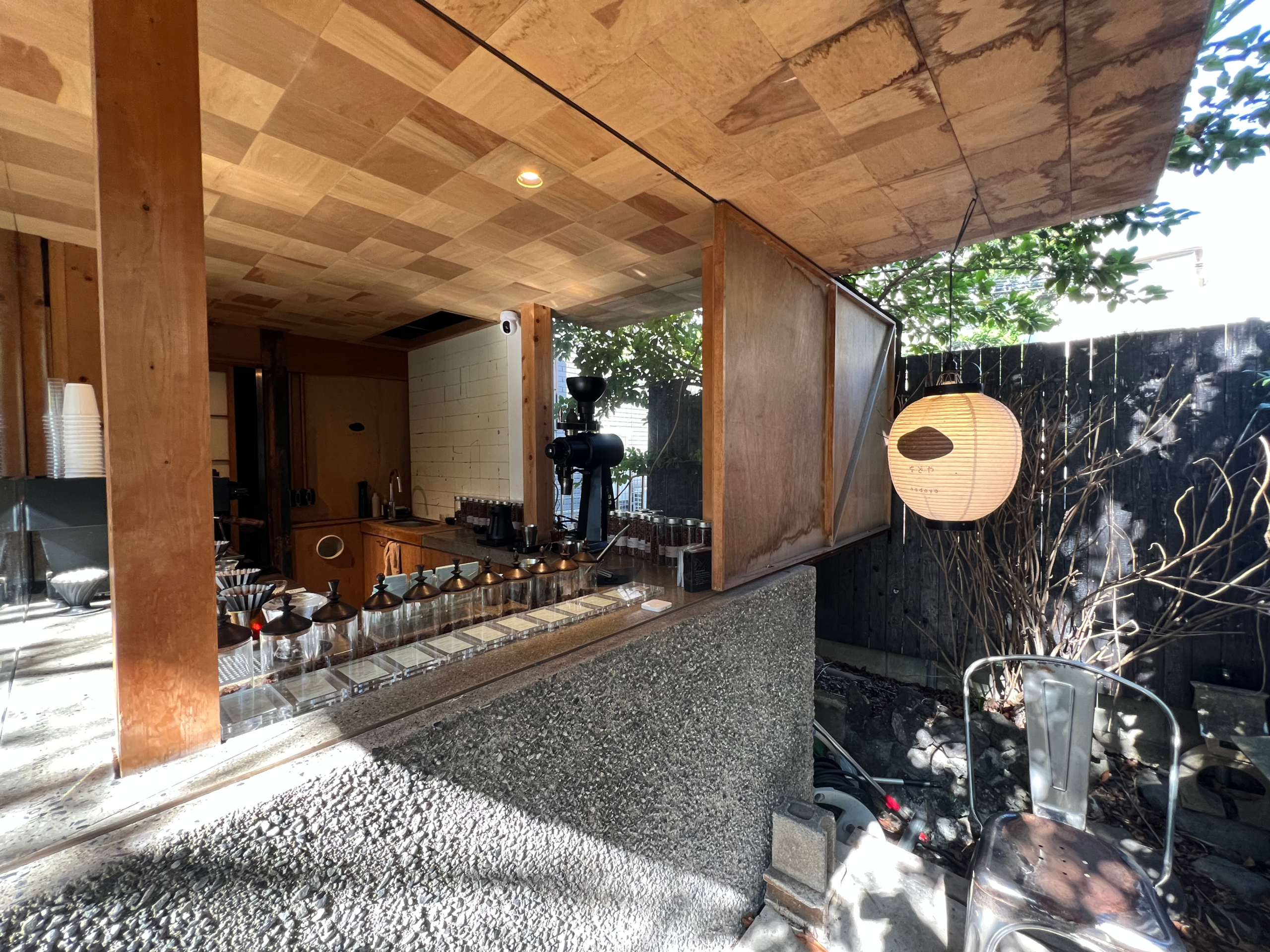
Admittingly, I had seen this one featured on Instagram and YouTube a lot and wanted to check it out for the vibes and aesthetics. That said, I knew they would provide solid coffee as they used beans from Glitch Coffee, a reputable roastery in Tokyo (which I later ended up visiting in Ginza). They also were close to one of my favorite bakeries in the Nishihara neighborhood, so I decided to drop by as soon as they opened.
When you arrive at Nadoya no Katte, you… almost miss it. The coffee shop is in an old house that is situated in quite a residential area. Had I not seen the sign or been familiar with what the garden looked like from social media, I could have made circles around the block trying to find it.


After entering through the front gate, you walk through a very shaded Japanese garden before stepping up to the counter to examine your beans of choice to order. I asked for something less acidic and was suggested the Ethiopia Sidama Elto Hamasho, which I got as a hot pourover. I could have also made my drink into an espresso drink, if I preferred.

Having had a lot of acidic coffees prior to this cup, I was ready for something more balanced and well-rounded – which is exactly what I got. Comfort in a cup. And it was a lovely place to enjoy a morning drink.
Unfortunately, with the lingering heat and recent bouts of rain, the garden had a few mosquitos buzzing around – and one bit me dead center on my forehead (and on the day where there was a special occasion and I was getting photographed – noooooo!). Once I realized this, I ended up drinking my coffee faster than I wanted to. So for those who are mosquito magnets like myself, maybe save this one for when it’s a little cooler and/or there are less mosquitos flying about!
Glitch Coffee & Roasters
Some friends came back from Japan just before my trip and raved about Glitch Coffee & Roasters. It also turned out Katsumi-san from Lonich, worked there as well. While I knew their coffee was good – based on what I had at Nadoya no Katte and other shops during previous trips – I wasn’t sure I would be able to make it to one of their locations with my packed schedule. However, I managed to time my morning walk on my birthday well to squeeze in a visit before the rest of the day’s activities.
While I thought I’d be early in the queue before opening, when I got there 10 minutes before the hour, there was already a bit of a line. The consistent drizzle of rain didn’t seem to deter anyone from stepping away, so I waited for about 30 minutes before I got waved into the shop to place my order.


Once inside, I was greeted again with a long row of beans and a choice to have my coffee as a hot or cold pour over, or as an espresso drink. I chose a Peruvian yellow geisha bean for a well-balanced cup. I took a seat at the bar and watched the small team crank out one coffee after another. While fast, they moved with a precision and care needed to treat these high quality beans with respect. After a few minutes, my coffee came in a lovely black cup with their logo, and a few extra pours in another ceramic receptacle.

I appreciated how smooth this was and how there were strong tea notes to begin with.
Glitch offers a small discount if you order a second cup of coffee. Since I hadn’t had many lattes during the trip, I decided to try an espresso drink and took it to go so I could make sure I checked out of my room on time. The latte I had with the La Lima bean from Colombia was truly delightful, almost mocha-y and toffee-y in flavor. This was a great, comforting drink to enjoy on my way back to the hotel in the rain.

Hibitano Coffee Roastery
During this trip, I joined my parents for a weekend getaway to Mishima, mainly to enjoy some hot springs on the top of a hotel with a view of Mount Fuji. But like any new place I visit, I scouted where I could get a good coffee – bonus points if they roasted their own. Hibitano Coffee Roastery not only did that, but also seemed to have the protein-rich breakfast offerings that I sought to start my days with.
Hibitano Coffee Roastery is a quaint and cozy shop, just off the road where you’ll find many shops and restaurants dedicated to selling unagi, a local delicacy. The shop is bright from the white interior and light wood accents, and smells toasty from the beans they roast and sell onsite. This morning, I decided to try their house blend. I thought was a very easy medium roast to drink, something that could be a good daily cup of coffee to start each morning with. It made for the perfect companion to go with my hearty breakfast of homemade chicken ham, a boiled egg, roasted seasonal vegetables, carrot salad, green salad, and a slice of thick toasted shokupan.


When I travel, I sometimes think about what sort of places I would frequent if I lived in the area. Hibitano Coffee Roastery would be one of those places, and it was clear with the number of locals who stopped by to grab a coffee during our short visit that this seems to be a local favorite.
Fluff Coffee Plus
By this point in my quick trip to Japan, I was squeezing in several cups of coffee a day to be able to try as many as possible – a departure from my one-cup-a-day policy back in Seattle (I either fall right asleep because the caffeine doesn’t impact me, or I stay up all night cause the caffeine impacts me. It’s a game of Russian roulette as to how I’ll react each day…). I had noticed one other coffee spot in the area that sparked intrigue, so after wandering around the neighborhood and checking out an art museum and some gardens, we made another stop for coffee.
Fluff Coffee Plus is another cozy neighborhood spot, sitting at the corner of a residential part of town. In contrast to Hibitano Coffee Roastery, Fluff Coffee Plus’s space has medium/dark woods paired with black furniture accents and various shades of green from house plants and dried leaves hanging from the ceiling. They too roasted their own beans and focused on single origin varieties. There were a few people there when we arrived, enjoying a coffee and a sweet treat in the quiet space.


… to be honest, I didn’t take that many notes and pictures there so I don’t have much to report on the coffee aside from it was tasty! (I also saw more explicit “No photos” signs around Mishima, which I later learned was more of a courtesy to not include strangers in your footage, which makes a lot of sense, but I was particularly sensitive about seeing the sign) There was also one man who I presumed was the owner diligently working the coffee and snacks, which meant we had to wait for a bit for the coffee to arrive. Once it did, we had to finish quickly to join my dad for our unagi lunch reservation – so we drank our cups pretty quickly!
Wednesday Coffee Stand
Since I had a little bit of time between finishing breakfast and checking out of the hotel before catching the train back to Tokyo from Mishima, I decided to squeeze in one more coffee shop on the south side of Mishima Rakujuen Park.
Wednesday Coffee Stand looks almost like an antique shop from outside, with its concrete walls, stained wooden accents, dried flowers, and soft lights coming from exposed hanging Edison bulbs. An older looking roasting machine sits by the front where there’s a small kitchen to prepare cups of coffee, pastries, and cheese toasts. My mom and I ordered an iced house blend to try. Unlike other house blends I’ve tried, they gave us the option to choose the roast level we preferred. We both opted for the medium roast.


As we waited for our coffee, which they seemed to have freshly made and then iced, we looked through the shop’s eclectic collection of books, which ranged from books about coffee to children’s picture books. This kind of collection added a layer of coziness to the stylish cafe.
The coffee itself was well-balanced, not too bitter nor acidic and very sippable as an iced cup. I imagine it would have gone well with a slice of Basque cheesecake I saw at another table, or any of their other seasonal sweets. We found the coffee very satisfying that we bought some drip bags as souvenirs to share with my sister and friends.
… and that concludes my coffee experiences around Japan for my quick one-week trip! This may likely turn into a series based off of where I travel to, so stay tuned for more posts…